
Ethimex is highly active in the development of Hard Seltzers. If you would like more information please contact us today.
If you are based in or have visited the USA in the last year, you may have noticed quite a few people drinking cans of hard seltzers (or perhaps you’re a hard seltzer imbiber yourself!). Part of the alcoholic Ready-to-Drink (RTD) category, hard seltzers was once a relatively non-existent drink but has boomed in the last year, spurring numerous internet memes and said to have caused disruption to the US beer industry. In the US alone, the hard seltzer market has a current volume of 82.5 million nine-litre cases, it’s larger by volume than vodka, the US’s leading spirits category and is predicted to be worth $2.5 billion in the US by 2021.
So, how has this happened? Is it really a threat to the beer industry? And with such strong growth in the US, will it generate the same reaction across the pond?
What is Hard Seltzer?
Hard seltzer/alcoholic seltzer is a carbonated low ABV (4-6%) beverage made from three basic components: alcohol, carbonated water and the desired flavouring (fruits are the most common Hard seltzer flavours). Most hard seltzers use a fermented base for their alcohol, brewed similar to beer. The most popular bases are fermented cane sugar or malted barley but several fruit bases are also being used. The majority of producers use sugar-based alcohol/fermented alcohol base as it brings a natural sweetness omitting the need to add any sugar (and calories) and it has a more neutral flavour which allows the added flavouring to take more prominence.
Because it’s brewed like beer, it’s also taxed like beer – in the US. Which is at a lower rate compared to beverages that have been “spiked” by neutral grain spirits or vodka.
It’s a White Claw Summer
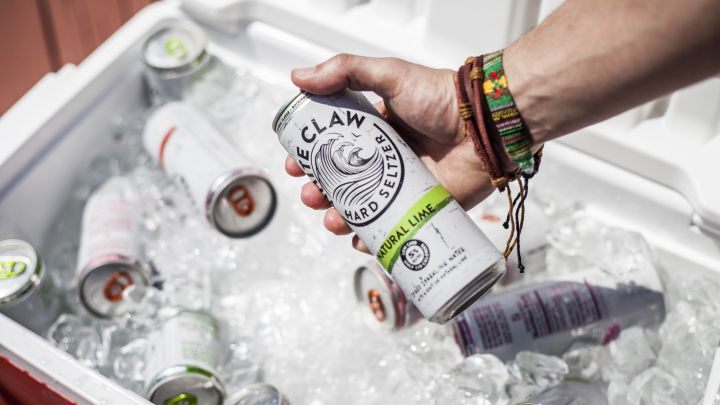
For those confused by the above heading, you were clearly not spending last summer drinking the category-leading brand, White Claw. Owned by Mark Anthony brands, White Claw was launched in 2016 but had a quiet first 3 years before it boomed in 2019. Data from Nielsen shows that sales increased by 250% in 2019 compared to the previous year and accounted for nearly 55% of hard seltzer sales for the week of the 4th July. The brand expects to see sales top $1.5 billion dollars by the end of 2019. During its peak consumption period in the summer of 2019, affectionately dubbed “White Claw Summer” by its drinkers, many stores couldn’t keep up with demand, to the extent that the brand had to announce a nationwide shortage of the product.
So, what spurred this kind of reaction? While research has shown that hard seltzers are popular across all ages and demographics, it’s a particular hit with health-conscious millennials consumer (male and female) and is a perfect fit to the overall “wellness” trend that is taking over the mind of consumers.
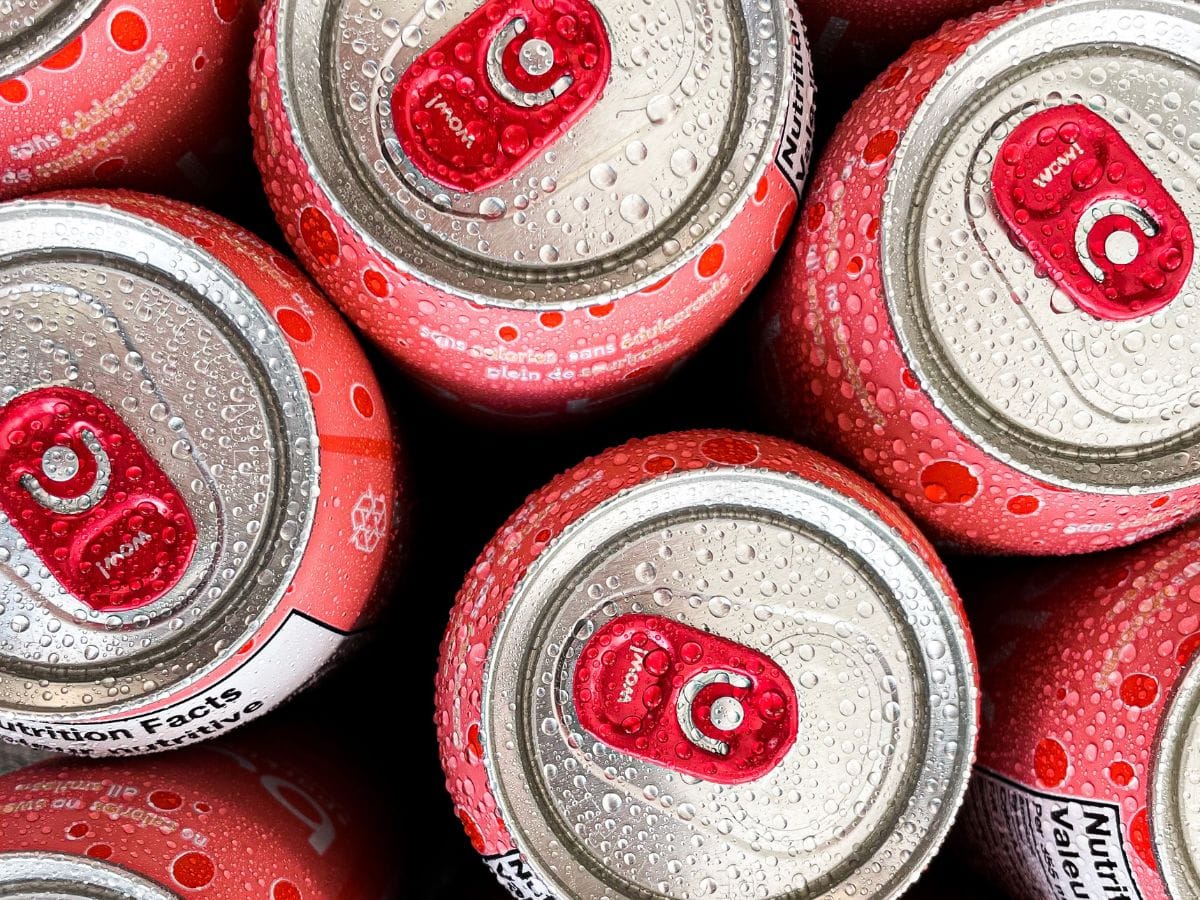
While hard seltzer is not a health drink, it positions itself as a “healthier” alternative to other alcoholic options. It’s low in ABV, low in calories (usually between 60 and 100 calories as compared to 150 calories for beer), carbs, sugar (often without added sugar), gluten-free (not if you are using a malt base alcohol), all beautifully packaged in convenient cans with modern branding.
Is This The End of Beer?
There is fear in the beer industry that hard seltzers are taking away sales from the beer market, particularly the light lager market, especially since both beverages have similar ABV% and there is some data and anecdotal evidence to this. According to market research company IRI, sales of Bud Light and Coors Light, the largest individual U.S. beer brands, are both down 5.8% and 2.9%, and while hard seltzer can’t claim full responsibility for this (the numbers have shown that it has slowly flattened out over the last several years), it definitely has contributed. Sanjiv Gajiwala, the vice president of marketing at Mark Anthony Brands, has reported that 55% of its White Claw volume has come from beer, 20% from wine and 17% from spirits (the remaining percentage is from cider and other flavoured malt beverages).
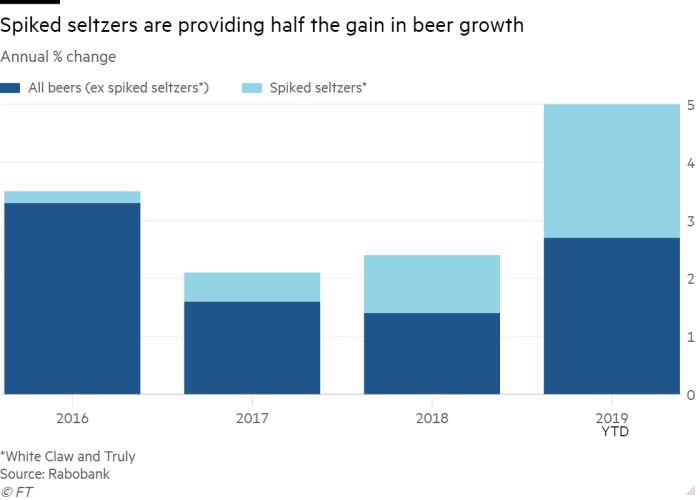
Whether or not hard seltzers will actually eclipse the beer market in the US, it’s hard to say and many brewers are taking real interest in hard seltzer. Not only do brewers like The Boston Beer Company already have hard seltzer in their portfolio (the Boston Beer Company own ‘Truly’, White Claws rival brand). Brewing giant Anheuser-Busch Inbev, which also owns hard seltzer drink Bon &Viv, has invested $100 million in the category to create its own seltzer brand off-shoot from its beer Bud Light ‘Bud Light Seltzer’, and Constellation Brands Inc is putting $40 million (its biggest-ever single brand investment) into the launch of a Corona brand hard seltzer.
Hard Seltzer in Europe
Currently, there are few hard seltzers options in Europe. The US Hard Seltzer brands like White Claw and Truly, have not made it over yet but come spring 2020 this will no longer be the case. The key question is, will it be able to replicate the same level of success in Europe? Insiders and analysts are positive that it will be successful but are sceptical that it will reach the same level of gravitas as the US.
Other areas of growth: Canada, Australia and Brazil.
There is already some concern over the translation of the actual “hard seltzer” name, which doesn’t have the same resonance in the European mindset as it does in the US (Europeans don’t call fizzy water “seltzer”). Additionally, other factors such as taxation and state of the beer market that allowed hard seltzers to thrive in the US are not the same in Europe. Not only does Europe have a more fragmented beer market it’s also in a much stronger state compared to its American counterparts.
But maybe we shouldn’t be so pessimistic about the fate of hard seltzers. Even though the ready-to-drink market in Europe is not as robust as the US, it is growing and gaining traction with the past year seeing several new launches including gin & tonic in a can from premium gin brands like Sipsmith which proved to be a hit, which makes hard seltzers the perfect fit. Who knows, maybe 2020 is when the UK and the rest of Europe will have their own White Claw summer.